



Marketing is a multifaceted process, but that doesn’t mean it should be a never-ending to-do list of manual tasks, follow-ups, and leads that inevitably slip through the cracks.
If your marketing efforts rely entirely on doing everything by hand, inconsistency is a forgone conclusion, and time becomes your most obnoxious enemy.
Marketing automation tools solve this problem by taking all of those repetitive marketing tasks off your plate, placing them on a smarter, scalable system that works even while you’re catching a nap at home.
This guide will break down what marketing automation is, how it functions, and how to build a stellar marketing automation strategy that powers results while eliminating the busywork.
What Is Marketing Automation?
Marketing automation is essentially what it sounds like, at least in simple terms. It’s the technology that automates repetitive marketing tasks, so your team can focus on more important things, like strategizing, while avoiding the gruntwork.
Think of it in terms of automated outbound emails, perfectly timed follow-ups, lead tracking, and campaign triggers that fire off based on what your audience is up to at any given moment.
However, it’s not exactly a “set it and forget it” tool either. Marketing automation still requires a clear and active strategy if you want it to work properly.
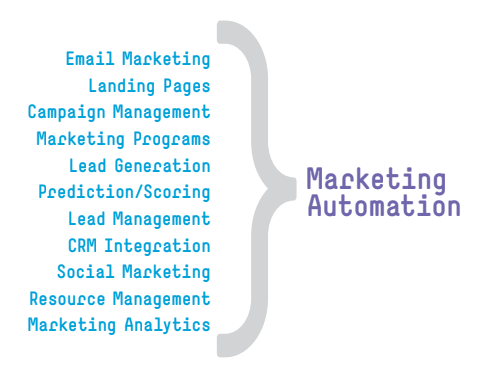
At its core, marketing automation handles four main functions: email marketing at scale, lead management/scoring, campaign automation across channels, and analytics tracking so you can see what’s working and what isn’t.
It’s designed to connect your marketing efforts, not to replace them wholesale. This provides your team with the bandwidth to do better work while the automation handles all the heavy lifting.
Why Marketing Automation Matters More Than Ever
Customer journeys are much more complicated than they were even ten years ago. Buyers interact with brands across email, social media, websites, and more before they decide to make a purchase.
Manually keeping up with all of that isn’t realistic for most marketing teams. Marketing automation is important because it creates consistency across all of these touchpoints, making sure the right message reaches the right person at the right time. It also makes scaling possible because you can do more without adding more manual work.
At a high level, the benefits of marketing automation include significant time savings, better audience targeting through segmentation, and an improved customer experience. Brands that embrace automation move faster and connect on a more meaningful level.
The Core Benefits of Marketing Automation
If you’re implementing the right automation strategy, the results will go well beyond saving a few hours each week. Here’s why marketing automation tools deliver real and measurable value:
- Save time by automating repetitive marketing tasks like follow-up emails and campaign sends.
- Improves lead quality through intelligent segmentation that groups prospects by behavior and interest.
- Increase conversions by delivering timely, relevant messaging when prospects are most receptive.
- Enhances personalization at scale, so every customer feels seen without requiring manual tailoring.
The ultimate advantage is ROI, not necessarily convenience, though that’s a positive part as well. Automation lets you invest your time where it moves the needle while the system takes care of the rest.
How Marketing Automation Works
Marketing automation works as a system of triggers and actions that are designed around user behavior. When someone does something (visits a page, fills out a form, or opens an email), the automation platform responds with a pre-set action.
This is the foundation of marketing automation and lead nurturing that powers modern customer engagement.
Marketing Automation Workflows Explained
Marketing automation workflows are the building blocks that turn individual actions into more coordinated, automated communication sequences. A workflow begins with a trigger, followed by a specific action in response.
That action might be sending a targeted email, assigning a lead score, or notifying your sales team that someone is ready to make a purchase. Built correctly, workflows create consistent and scalable communication that runs in the background.
Lead Nurturing Automation
Lead-nurturing automation moves a prospect from casual interest to meaningful action. It’s a guide for potential customers, walking them through each stage of the buyer’s journey with content and messaging.
Common examples include welcome email sequences for new subscribers, educational drip campaigns that build trust, and automated follow-ups triggered by specific behaviors, such as clicking a pricing page link.
The combination of personalization and precision timing is what makes lead nurturing automation such a powerful conversion tool.
Building a Marketing Automation Strategy That Works
A strong marketing automation strategy begins with understanding your audience, not with the fanciest online tools available. The technology should support your strategy instead of defining it.
Define Your Goals Clearly
Are you chasing leads, closing sales, or improving retention? Your automation should serve one of these outcomes directly.
Map Your Customer Journey
Beginning from first awareness and running through the purchase and beyond, you need to map your customer journey so that you always know where automation fits into each stage.
Identify Automation Opportunities
There are probably areas right now where your team is draining time through manual tasks that could be automated. That’s not going to deliver results.
Align Marketing and Sales Teams
If you are aligning your marketing and sales teams, leads won’t fall through the cracks during handoff. A solid marketing automation strategy requires both teams to work from the same playbook.
Choosing the Right Marketing Automation Tools
There are many marketing automation tools available, from entry-level platforms for small businesses to advanced marketing automation software built for enterprise teams. The key is to find the tools that support your existing strategy, instead of trying to replace the strategy altogether. When you’re evaluating options, focus on a few essential capabilities:
- Workflow automation that’s intuitive to build and flexible enough to adapt as your needs change.
- CRM integration so your customer data flows smoothly between marketing and sales systems.
- Analytics and reporting that provide you with clear visibility into campaign performance and ROI.
- Segmentation capabilities that let you target specific audience groups with relevant messaging.
Usability and scalability are just as important as features. The best marketing automation platforms are the ones that teams are using consistently.
Common Marketing Automation Mistakes to Avoid
Marketing automation is powerful, but only when it’s set up the right way from the get-go. Here are some mistakes that will undoubtedly trip up most teams and how you should address them.
- Over-automating and losing the human touch. Robotic interactions will lose your audience’s connection.
- Poor segmentation that sends the same generic message to everyone.
- Ignoring data and performance metrics, which means you’re running campaigns blind.
- Setting up workflows once and never optimizing them.
There’s a common thread across all of these mistakes, and it boils down to a lack of strategy behind the automation. Tools are only as good as the plans for using them.
Turning Automation Into Real Growth
The real value of marketing automation is revealed when you move beyond the setup process and begin using the data to drive your decisions. Your marketing automation workflows and lead nurturing automation should be feeding insights back into your strategy on a continuous basis.
Use campaign analytics to identify which messages are resonating, which segments are converting, and where the prospects are dropping out of the funnel. From that, optimize your campaigns, refine your targeting, and adjust your messaging based on what the numbers are telling you.
Your automation system should connect directly to business outcomes to become a genuine growth machine.
The Bottom Line: Work Smarter, Not Harder
Marketing automation is no longer optional for businesses that want to compete at a serious level. It delivers efficiency and scalability that a manual process simply can’t keep up with. Combining a clear strategy with the right tools will streamline a system that handles repetitive tasks, nurture leads through every stage of the funnel, and provide your teams with real-time analytics.
The core components make everything work (well-built and automated workflows, intelligent lead nurturing, and data-driven optimization). Automation isn’t the future; it’s the “right here and now,” and it’s time to start working smarter instead of harder.
Ready to stop letting leads slip through the cracks and start building marketing that converts? Thrive Pop helps businesses design and implement automation strategies, select the right tools, and connect marketing efforts to results. Let’s talk about how to make automation work for you, instead of the other way around.